
If you are looking for a cat litter that is lightweight, low-dust, easy to clean, and made from plant-based materials, you may have come across tofu cat litter.
But is tofu cat litter actually good?
For many cats and their owners, tofu cat litter can be a practical alternative to traditional clay litter. It offers several advantages, including good absorption, effective clumping, lightweight pellets, and plant-based ingredients. However, it also has some limitations. The price can be higher than conventional clay litter, some cats may need time to accept the pellet texture, and odor control can vary depending on the formula.
In this guide, we will look at the pros and cons of tofu cat litter, how it compares with other types of cat litter, and what to consider when choosing a high-quality tofu cat litter.
Is Tofu Cat Litter Good?
Yes, tofu cat litter can be a good choice for many cats and households, but it is not necessarily the best option for every cat.
Tofu cat litter is generally made from plant-based materials such as soybean fiber and other biodegradable ingredients. Its lightweight structure allows it to absorb moisture and form clumps that can be removed easily during daily cleaning.
Some of the main benefits include:
Low dust compared with many traditional litter products
Good urine absorption
Easy clumping and scooping
Lightweight and easy to carry
Plant-based ingredients
Biodegradable materials in many formulas
Convenient daily litter box maintenance
At the same time, there are some factors to consider:
It can cost more than basic clay litter
Some cats may prefer fine-grain litter
Odor-control performance depends on the formula
Moisture can affect storage and product performance
Flushability depends on the specific product and local plumbing system
The right choice therefore depends on your cat's preferences, your cleaning routine, your budget, and the characteristics of the particular tofu cat litter you choose.
What Is Tofu Cat Litter?
Tofu cat litter is a type of plant-based cat litter commonly made using soybean fiber or tofu-processing byproducts. Depending on the formula, manufacturers may also use ingredients such as corn starch, cassava, natural binders, or other plant-based materials.
The materials are processed into small pellets or granules that can absorb liquid in the litter box.
When urine comes into contact with the litter, the absorbent material takes in moisture and can form a clump. The used portion can then be scooped out while the remaining litter stays in the box.
Because tofu litter is made from plant-based materials, it is often marketed as a more environmentally conscious alternative to mineral-based cat litter.
However, not all tofu cat litter products have the same ingredients or performance. Pellet size, density, absorbency, clumping strength, odor-control ingredients, and manufacturing quality can all affect the final product.

The Tofu cat litter is made from soybeans and corn starch and contains no chemical additives or synthetic materials. It is 100% biodegradable and dissolves quickly, making flushing easy and stress free. Say goodbye to bins filled with used cat litter! Unlike crystal cat litter, Tofu Cat Litter is 100% bio-degradable. When you need to dispose of it, you can place it in the green bin, your compost bin or, in small qualities, you can flush it down the toilet.

Tofu cat litter is excellent at absorbing urine; one bag of Enqi Tofu Cat Litter can last up to 20 days in a single cat household! Adding cornstarch to it helps eliminate foul odours, and prevents it from sticking to the litter tray by clumping quickly.
The tofu pellets are lightweight with sponge-like absorbency and has excellent clumping abilities. This prevents it from sticking to your cat's paws or breaking apart and disintegrating when scooped, greatly reducing chances of tracking.
Pros of Tofu Cat Litter
1. Tofu Cat Litter Is Usually Low-Dust
Dust is an important consideration when choosing cat litter, especially for indoor cats.
Many tofu cat litter products are designed to produce relatively little visible dust during pouring and scooping. This can help keep the area around the litter box cleaner.
However, low-dust does not necessarily mean completely dust-free. The amount of dust can vary depending on the raw materials, pellet structure, production process, transportation, and handling.
For this reason, it is better to evaluate the actual dust performance of a specific product rather than assuming that every tofu cat litter has identical performance.
2. Good Absorption
One of the main reasons people choose tofu cat litter is its ability to absorb liquid.
A well-formulated tofu cat litter can quickly absorb urine and help keep the surrounding litter relatively dry. Good absorption also contributes to easier litter box cleaning.
Absorption performance depends on factors such as:
Raw material quality
Fiber structure
Pellet density
Pellet size
Moisture content
Manufacturing process
For manufacturers, maintaining consistent raw material and production quality is particularly important because these factors can directly affect the consumer's experience.
3. Strong Clumping Makes Scooping Easier
Clumping is another important feature of tofu cat litter.
When the litter absorbs urine, the affected material can form a compact clump. A firm clump is easier to scoop without breaking apart.
Good clumping can provide several practical benefits:
Easier daily cleaning
Less unnecessary litter removal
Better litter box hygiene
Less time spent cleaning
However, clumping performance varies between products. A product with excellent absorption does not automatically have excellent clumping strength, so both characteristics should be considered.
4. Lightweight and Easy to Handle
Tofu cat litter is generally lighter than many traditional mineral-based litters.
This can make a noticeable difference when carrying litter from a store, moving bags around the house, or cleaning a litter box regularly.
Lightweight litter can be particularly convenient for:
Apartment households
Multi-cat households
People who buy litter in larger quantities
Cat owners who frequently need to transport litter
5. Plant-Based Materials
Tofu cat litter is commonly associated with plant-based raw materials.
Depending on the formulation, it may contain soybean fiber and other plant-derived ingredients. This makes tofu litter attractive to consumers who are looking for alternatives to conventional mineral-based litter.
However, consumers should check the ingredient list of the specific product because the term "tofu cat litter" does not indicate one standardized formula.
6. Biodegradable Materials
Many tofu cat litter products use biodegradable plant-based materials.
This is one of the major reasons tofu litter has become popular among cat owners looking for more environmentally conscious options.
However, biodegradable and flushable are not the same thing.
A litter may contain biodegradable materials while still not being suitable for flushing in every household. Disposal recommendations should always follow the product instructions and local wastewater requirements.
Cons of Tofu Cat Litter
1. It Can Be More Expensive Than Clay Litter
One potential disadvantage is price.
Basic clay cat litter is widely available and can be relatively inexpensive. Tofu cat litter may cost more because of its raw materials, processing, packaging, and positioning as a plant-based product.
For some consumers, the additional cost may be worthwhile because of the lightweight handling, low-dust characteristics, and convenient clumping. For others, traditional litter may better fit their budget.
2. Some Cats May Not Like the Pellet Texture
Cats can be very particular about the texture of their litter.
Tofu cat litter is often produced in pellet form, while some cats are accustomed to fine-grain clay or sand-like litter.
A cat that strongly prefers fine particles may need some time to adapt to tofu pellets.
If you are switching litter types, a gradual transition can help. Mixing a small amount of the new litter with the cat's existing litter and increasing the proportion gradually may make the change easier.
3. Odor Control Depends on the Formula
Tofu cat litter can help control odors by absorbing urine and reducing the amount of exposed moisture.
However, odor-control performance varies considerably between products.
It can depend on:
Absorption speed
Clumping performance
Litter depth
Cleaning frequency
Odor-control additives
Ventilation
The number of cats using the litter box
Therefore, it is better to look at the complete formulation and real-world performance rather than assuming that all tofu cat litter provides the same level of odor control.
4. Humidity Can Affect Tofu Cat Litter
Because tofu cat litter is highly absorbent, moisture exposure during storage can affect its condition.
High humidity may cause pellets to absorb moisture before they are used, which can affect their texture and clumping performance.
Proper packaging and storage are therefore important.
Tofu cat litter should generally be kept:
In a dry environment
Away from direct water exposure
Properly sealed after opening
Away from excessive humidity
For manufacturers and distributors, moisture-resistant packaging is especially important during storage and transportation.
5. Not All Tofu Cat Litter Is the Same
This is an important point that is sometimes overlooked.
Two products can both be called "tofu cat litter" while having noticeably different performance.
Differences may include:
Ingredient composition
Pellet size
Pellet density
Absorption rate
Clumping strength
Dust level
Odor-control system
Scent
Packaging
Production quality
Therefore, choosing a good tofu cat litter requires looking beyond the name of the product.
Tofu Cat Litter vs. Clay Cat Litter
Tofu and clay cat litter have different characteristics, and the better fit depends on what you prioritize.
| Feature | Tofu Cat Litter | Clay Cat Litter |
|---|---|---|
| Main material | Plant-based materials | Mineral clay |
| Weight | Generally lightweight | Generally heavier |
| Dust | Often low-dust | Varies by product |
| Absorption | Good | Good |
| Clumping | Good in clumping formulas | Good in clumping formulas |
| Biodegradability | Often uses biodegradable materials | Generally not biodegradable |
| Texture | Usually pellets or granules | Often fine or granular |
| Price | Often higher | Often lower |
| Flushability | Product-dependent | Generally not recommended |
| Storage | Needs protection from moisture | Also requires dry storage |
Neither type is automatically suitable for every cat.
The most important factors are your cat's litter preference, your cleaning routine, budget, odor-control requirements, and the specific product formulation.
Tofu Cat Litter vs. Silica Cat Litter
Tofu and silica cat litter work differently.
Silica litter uses highly absorbent silica crystals, while tofu litter uses plant-based absorbent materials.
Tofu litter may appeal to consumers who prioritize plant-based and biodegradable materials. Silica litter, meanwhile, is known for its moisture absorption and long-lasting use.
When comparing the two, consider:
Absorption
Odor control
Dust
Texture
Tracking
Weight
Disposal
Material preference
Cost
The best option depends on the individual cat and the owner's priorities.
Is Tofu Cat Litter Flushable?
Some tofu cat litter products are marketed as flushable because their plant-based materials can break down in water.
However, you should not assume that all tofu cat litter can be flushed.
Flushability depends on the specific formulation, local plumbing system, wastewater infrastructure, and product instructions.
Even if a product is designed to break down in water, flushing large amounts of litter at once can potentially create plumbing problems.
Always check the manufacturer's disposal instructions and local requirements before flushing tofu cat litter.
Is Tofu Cat Litter Safe for Cats?
Tofu cat litter is generally made from plant-based materials and is widely used as cat litter.
However, "tofu cat litter" describes a category of products rather than a single standardized formula. Safety and suitability can therefore depend on the actual ingredients and manufacturing quality.
When selecting tofu cat litter, cat owners may want to check:
The ingredient list
Whether artificial fragrances are used
Dust performance
Pellet size
Manufacturing quality
Product instructions
If your cat has unusual reactions after changing litter, discontinue the new product and consult a veterinarian if necessary.
Who Should Use Tofu Cat Litter?
Tofu cat litter may be worth considering if you:
Prefer plant-based litter materials
Want a lightweight litter
Prefer low-dust litter
Want easy-to-scoop clumps
Prefer biodegradable materials
Keep cats indoors
Want a convenient daily cleaning routine
It can also be useful for households where carrying heavy bags of litter is inconvenient.
Who Might Prefer Another Type of Cat Litter?
Tofu litter may not be the right fit for every household.
You may want to consider other litter types if:
Your cat strongly prefers fine-grain litter
Your primary concern is minimizing cost
Your cat refuses to use pellet-style litter
You need a specific type of odor-control system
Your local plumbing system does not support flushing litter
The most important factor is whether your cat consistently uses the litter box comfortably.
How to Choose a Good Tofu Cat Litter
Not all tofu cat litter performs the same way. Before purchasing or sourcing a product, consider the following factors.
1. Check the Ingredients
Look for clear information about the main raw materials and any additional ingredients.
If you are looking for plant-based litter, check whether the product contains primarily plant-derived materials.
2. Consider Pellet Size
Different cats have different preferences.
Smaller pellets may feel more similar to conventional granular litter, while larger pellets can offer different tracking and handling characteristics.
3. Evaluate Clumping Strength
A good clump should be strong enough to scoop without easily breaking apart.
This helps make daily cleaning easier and can reduce the amount of unused litter removed from the box.
4. Check Dust Performance
Low dust can help keep the area around the litter box cleaner.
Manufacturers should pay attention to raw material processing, pellet quality, and production controls to maintain consistent dust performance.
5. Consider Odor Control
Look at the complete odor-control formulation rather than relying only on marketing claims.
Absorption, clumping, litter depth, cleaning frequency, and additives can all influence odor performance.
6. Check Whether It Is Scented
Some tofu cat litters use fragrances to provide a particular scent.
However, some cats and owners prefer unscented products. Offering both options can help manufacturers and retailers serve different consumer preferences.
7. Check Packaging and Moisture Resistance
Because tofu cat litter is absorbent, packaging plays an important role.
Good packaging should help protect the product from moisture during:
Manufacturing
Warehousing
Ocean or land transportation
Retail storage
Home storage
8. Follow Disposal Instructions
Do not assume that a biodegradable product is automatically suitable for flushing.
Always check the manufacturer's instructions before choosing a disposal method.
Suitable packing method for tofu cat litter
Tofu cat litter is an eco-friendly alternative to traditional clay or silica gel cat litters. It's made from natural tofu residue and is biodegradable. When packing tofu cat litter, it's important to maintain its dryness and prevent exposure to moisture. Here's a suitable packing method for tofu cat litter:
1. Use Waterproof Packaging:
Pack the tofu cat litter in waterproof packaging materials. Plastic bags made of thick, durable, and waterproof material can be effective. Ensure that the bags are sealed properly to prevent any moisture from entering.
2. Sealed Bags or Boxes:
Pack the tofu cat litter in sealed bags or boxes to prevent air and moisture from getting inside. Vacuum-sealed bags are even better, as they remove excess air and create a tight seal.
3. Desiccant Packs:
Include desiccant packs inside the packaging to absorb any moisture that might be present. Desiccant packs help in maintaining the dryness of the tofu cat litter.
4. Avoid Direct Sunlight:
Store the packed tofu cat litter away from direct sunlight and heat sources. Exposure to sunlight and high temperatures can lead to condensation inside the packaging, making the litter damp.
5. Avoid Humid Environments:
Store the packaged tofu cat litter in a cool, dry place. Humid environments can cause the litter to clump or become less effective in controlling odors.
6. Proper Labeling:
Clearly label the packaging with product information, including brand name, product name, quantity, and usage instructions. Proper labeling is essential for consumers to know how to use the product correctly.
7. Quality Control:
Implement quality control measures to ensure that the tofu cat litter is of high quality before packing. Regular testing can help maintain consistency in the product's absorbency and odor control properties.
8. Environmentally Friendly Materials:
Consider using environmentally friendly packaging materials to align with the eco-friendly nature of the tofu cat litter. Biodegradable or recyclable packaging options can appeal to environmentally conscious consumers.
9. Protective Palletizing (for bulk shipments):
If shipping in bulk quantities, palletize the bags or boxes properly. Use stretch wrap to secure the bags or boxes on the pallets and protect them from dirt, moisture, and other contaminants during transit.
By following these packing methods, you can ensure that tofu cat litter remains dry and effective for consumers while also being environmentally friendly.
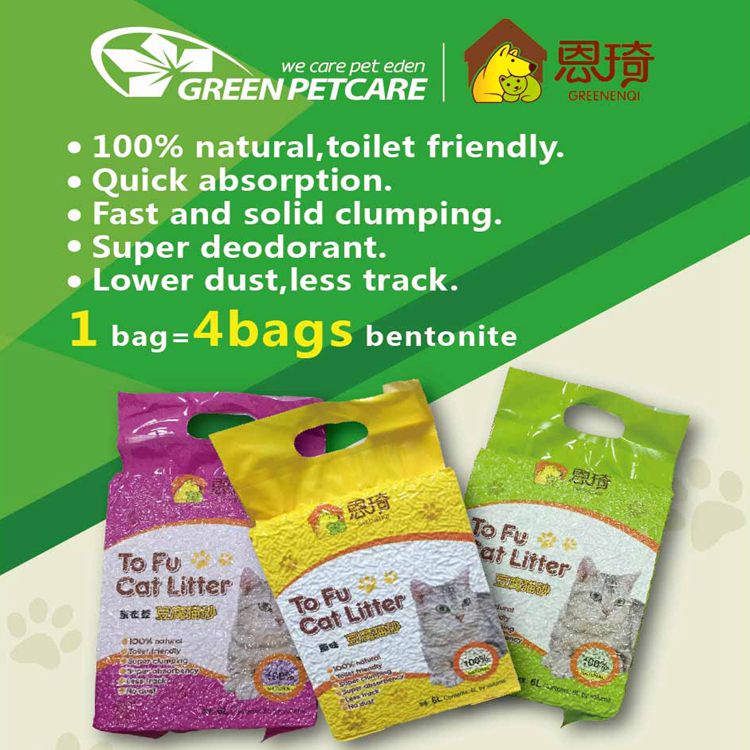
Tofu cat litter as one kind of plant cat litter, receive well welcome among pet owners nowadays. Green Pet Care supply Tofu cat litter for many years. Any interest, pls contact us.
What Makes High-Quality Tofu Cat Litter?
For tofu cat litter manufacturers, product quality starts long before the final bag reaches the consumer.
Important quality factors include:
Raw Material Quality
Consistent raw materials help maintain consistent absorption, pellet structure, and clumping performance.
Pellet Density and Size
Pellet structure affects absorption, tracking, handling, and the overall litter-box experience.
Clumping Performance
Strong and stable clumps make daily scooping easier and can reduce unnecessary litter waste.
Dust Control
Production and screening processes can influence the amount of fine particles in the finished product.
Moisture Control
Proper drying, storage, and packaging help protect the litter from absorbing moisture before use.
Consistent Manufacturing
Batch-to-batch consistency is particularly important for retailers, distributors, and private-label customers.
For OEM and ODM customers, manufacturers may also need to consider formula customization, pellet size, fragrance, packaging format, branding, and market-specific requirements.
Frequently Asked Questions
Is tofu cat litter better than clay litter?
Tofu cat litter and clay litter have different advantages. Tofu litter is generally lightweight and plant-based, while clay litter is widely available and often less expensive. The right choice depends on the cat and the owner's priorities.
Does tofu cat litter control odor?
Tofu cat litter can provide good odor control through moisture absorption and clumping, but performance varies depending on the formulation and cleaning routine.
Does tofu cat litter clump well?
Many tofu cat litters are designed to form clumps when they absorb urine. Clumping strength varies between products and depends on the formulation and manufacturing process.
Is tofu cat litter dust-free?
Tofu cat litter is often designed to be low-dust, but no product should be assumed to be completely dust-free without appropriate testing.
Can kittens use tofu cat litter?
Tofu cat litter may be suitable for kittens, but the specific product formulation and pellet size should be considered. Always follow the product manufacturer's recommendations.
How long does tofu cat litter last?
How long tofu cat litter lasts depends on the number of cats, litter box size, litter depth, cleaning frequency, and product formulation. Regular scooping generally helps extend the usable life of the remaining litter.
Does tofu cat litter track?
Tracking varies by pellet size and formula. Larger, well-formed pellets may behave differently from smaller pellets, so tracking performance should be evaluated on the specific product.
Is tofu cat litter worth it?
For consumers who value lightweight handling, plant-based materials, low dust, and convenient clumping, tofu cat litter can be worth considering. However, the higher price compared with some conventional litters may be an important factor for budget-conscious buyers.
Why Choose Green Pet Care for Tofu Cat Litter?
Green Pet Care specializes in pet care products and cat litter manufacturing, providing solutions for customers looking for tofu cat litter and other cat litter products.
As a manufacturer, we understand that a successful cat litter product requires more than simply choosing a raw material. Absorption, clumping, dust control, pellet quality, packaging, storage stability, and batch consistency all contribute to the final product.
For distributors, retailers, and private-label brands, we can support different requirements for OEM and ODM tofu cat litter, including product formulation, pellet specifications, packaging, and branding.
If you are looking for a tofu cat litter manufacturer or want to develop your own private-label cat litter, contact Green Pet Care to discuss your requirements.
Final Thoughts
So, is tofu cat litter good?
For many cats and owners, it can be a practical alternative to traditional litter. Its main advantages include lightweight handling, good absorption, clumping performance, low-dust characteristics, and plant-based materials.
But tofu cat litter is not automatically the right choice for every cat. Texture preference, price, odor control, humidity, formulation, and disposal requirements should all be considered.
Rather than choosing a litter based only on the word "tofu," look at the ingredients, pellet quality, absorption, clumping, dust performance, packaging, and overall manufacturing quality.
That is what makes the difference between an average tofu cat litter and a high-quality one.


